Panda Climbing Bamboo Cute Sticker: A Designer's Review
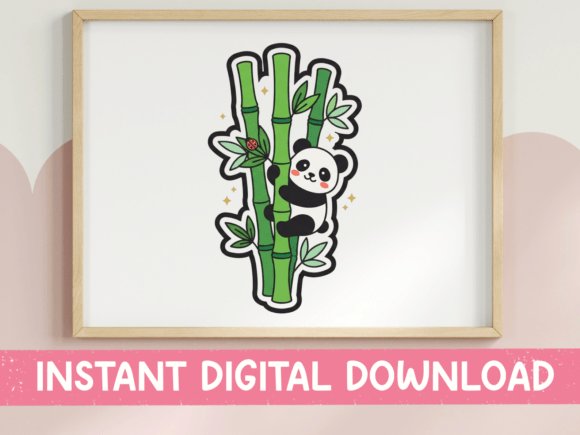
When I first pulled up the Panda Climbing Bamboo Cute Sticker on my screen, my immediate reaction wasn't just about cuteness; it was about viability. As someone who spends hours digitizing and stitching for clients, I look past the initial "aww" factor to ask the hard questions: Will this stitch out cleanly? Does the composition work for a hoop? Is this something a customer will actually pay for on a finished product? This design, categorized under Crafts and Graphics, presents a charming scene of a round-faced panda clinging to tall green bamboo stalks, accented with red flowers and scattered sparkle stars. But let's talk about how this translates from a digital graphic to a tangible embroidery project.
First Impressions and Visual Personality
The mood of this design is undeniably playful and adventurous. It captures that specific niche of "nature meets whimsy" that performs exceptionally well in the current market. The layout features a vertical orientation, which is immediately interesting because it breaks away from the standard horizontal logos we often see on apparel. The contrast between the black and white panda and the vibrant green bamboo creates a natural focal point. However, as a designer, I notice the "sparkle stars" mentioned in the description. In a digital graphic, these add magic. In embroidery, they require careful handling. Are they intended as satin stitch accents, running stitch details, or perhaps small fill areas? The success of this design hinges on how those tiny elements are rendered in the embroidery file. If they are too small, they risk becoming thread blobs; if handled with a clever running stitch, they could add delightful texture without compromising durability.
Real-World Application: The Tote Bag Scenario
To truly evaluate the Panda Climbing Bamboo Cute Sticker, I imagined a specific real-life scenario: a custom order for a local boutique needing a limited run of eco-friendly tote bags. These bags are made of a medium-weight canvas, a fabric with a distinct weave. Placing this design here makes sense. The verticality of the bamboo allows the panda to climb up the side of the bag, utilizing the long, narrow space often wasted on tote designs.
In this context, the thread colors become critical. The green of the bamboo needs to pop against the natural canvas, while the black of the panda must be dense enough to prevent the fabric grain from showing through. For a handmade product like this, the perceived value is tied directly to stitch quality. If the panda's face looks muddy due to poor stitch density management, the customer perceives the item as cheap. Conversely, if the red flower accents are crisp and the stars are neatly placed, the finished product feels premium. This design has the potential to elevate a simple tote into a statement piece, provided the digitizer has accounted for the fabric texture.
Ideal Surfaces and Product Fit
Beyond tote bags, where else does this design shine? I see strong potential for sweatshirt embroidery. A crewneck sweatshirt offers a large, stable canvas where the details of the bamboo leaves and the panda's expression can be fully appreciated. It would also work beautifully as an embroidered patch. If you were to stitch this onto a twill backing and cut it out, the rounded shapes of the panda and the organic lines of the bamboo would create a soft, approachable patch perfect for ironing onto denim jackets or backpacks.
For baby embroidery, this is a contender, but with caveats. The theme is perfect for a nursery, perhaps on a blanket or a bib. However, babies are messy. Those red flower accents and sparkle stars need to be secured tightly. If the design relies on long floating stitches for the stars, they might snag on tiny fingers or pacifiers. For infant wear, I would recommend verifying if the design can be simplified or if a high-quality stabilizer is non-negotiable to keep the back clean and comfortable against sensitive skin.
Technical Considerations and Potential Pitfalls
No design is universal, and the Panda Climbing Bamboo Cute Sticker is no exception. There are specific situations where you need to proceed with caution. First, consider hoop size. Because the bamboo stalks are described as "tall," this design likely requires a larger hoop or a re-digitized version for smaller frames. Trying to force a vertical design into a small 4x4 hoop might result in cropping the top of the bamboo or the stars, ruining the composition. Always check the dimensions of the digital embroidery file before committing to a project.
Textured fabrics present another challenge. While canvas works well, trying this on a highly textured fleece or a ribbed knit could distort the fine details of the panda's face. The satin stitch columns used for the bamboo might sink into deep piles, losing their definition. Similarly, stretchy fabrics like jersey knits require a robust stabilization strategy. Without the right cut-away stabilizer, the weight of the dense black fill on the panda could cause the fabric to pucker over time, especially after washing.
Dark fabrics are also a variable. The description highlights a black and white panda. On a navy or black garment, the panda's body will disappear. You would need to confirm if the design includes an underlay or a border to separate the panda from the background fabric. If not, this design is best reserved for light or neutral backgrounds unless you plan to modify the file yourself.
Enhancing Brand Value and Customer Trust
For Etsy sellers and craft business owners, consistency is key. Using a design like this across a product line—say, on towels, aprons, and pillows—creates a cohesive brand identity. The "adventure" theme appeals to a specific demographic: parents looking for unique nursery decor, or young adults who appreciate kawaii aesthetics. When a customer sees a clean, well-executed version of the Panda Climbing Bamboo Cute Sticker, it builds trust. It signals that the maker cares about detail. Poor execution, however, can damage a reputation quickly. The difference between a hobbyist and a professional often lies in how they handle the tricky parts of a design, like those scattered stars and the transition between the panda's fur and the bamboo.
Practical Notes for the Embroiderer
Before you start stitching this design for a client or listing it as a small shop product, here is my professional advice:
- Test on Scrap Fabric: Never skip the test stitch. Use the exact fabric you intend to sell. Check how the green bamboo interacts with the material's weave.
- Check Thread Contrast: Ensure the red flowers stand out against the green bamboo. If the shades are too similar in person, the detail will be lost.
- Review Stitch Density: Look closely at the panda's black areas. If it's too dense, it will become stiff and board-like. If too light, the fabric will show through.
- Inspect Small Details: Zoom in on the "sparkle stars." Are they viable for your machine's minimum stitch length? If not, consider removing them or replacing them with a single seed stitch.
- Mockup Testing: Create printable mockups in both black and white to see how the design holds up without color reliance. This helps assess the structural integrity of the lines.
- Licensing Verification: Since this is a graphic asset, confirm the licensing terms. Can you use it for commercial embroidery? Are there restrictions on the number of items you can sell? Never assume a design is free for commercial use without reading the fine print.
Ultimately, the Panda Climbing Bamboo Cute Sticker is a design with significant potential for the right applications. It brings a narrative element to embroidery that goes beyond simple monograms. Whether you are creating a personalized gift for a panda lover or expanding your inventory of holiday embroidery items, this design offers a fresh, vertical composition that stands out. Just remember that the digital preview is only half the battle; the true test is in the hoop, the thread, and the final stitch. Treat it with the technical respect it deserves, and it will become a standout asset in your creative toolkit.