Review: America 1776 4th of July Design for Embroidery
As a designer who spends more time staring at stitch simulations than most people spend watching television, I approach every new digital embroidery file with a healthy dose of skepticism. We have all been burned by beautiful on-screen graphics that turn into thread-breaking nightmares once they hit the machine. So, when I recently got my hands on the America 1776, 4th of July T Shirt Design, I didn't just look at the preview images; I immediately started thinking about hoop placement, stabilizer choices, and how this graphic would translate from a flat screen to a textured fabric surface.
This isn't just another patriotic clipart collection. While the product description highlights its utility for printed t-shirts, mugs, and stickers, my interest lies in its potential as a robust machine embroidery design for custom apparel and handmade goods. The files provided—AI, SVG, PNG, EPS, DXF, and PDF—suggest a vector-based origin, which is excellent news for us. It means the lines are clean, scalable, and ready to be digitized or used as a precise template for appliqué work without losing resolution.
First Impressions: Mood and Visual Personality
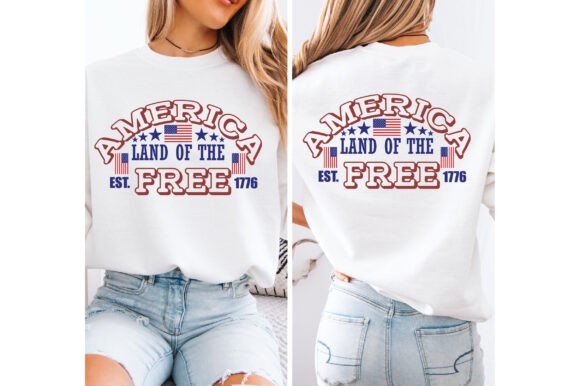
The first thing that strikes me about the America 1776, 4th of July T Shirt Design is its bold, historical confidence. There is no wishy-washy ambiguity here; the layout screams independence. The typography likely leans towards classic serif or slab-serif styles reminiscent of the Declaration of Independence, paired with iconic imagery like stars, stripes, or liberty bells. For an embroidery project, this strong visual personality is crucial. Weak designs get lost in the texture of a towel or the pile of a sweatshirt, but a design with this kind of structural integrity holds its own.
The mood is celebratory yet grounded. It feels appropriate for a wide range of applications, from a high-end boutique tote bag to a casual family reunion shirt. As a T-Shirt Design intended for graphics, it has the necessary contrast and spacing to work well when converted into satin stitch lettering and fill stitch backgrounds. The balance between negative space and detailed elements suggests that, with proper digitizing, it will avoid the common pitfall of becoming a solid, stiff puckered mess.
Real-World Application: The Custom Tote Bag Scenario
To truly test the viability of this design, I imagined a specific real-life scenario: creating a limited run of canvas tote bags for a local farmer's market stall specializing in American-made goods. The goal was to create a handmade product that felt premium but retained a rustic, authentic charm.
Using the America 1776, 4th of July T Shirt Design as the core asset, I envisioned placing it centrally on a natural cotton canvas bag. Because canvas has a distinct weave, the design's line weight becomes critical. If the details are too fine, they disappear; if they are too dense, the fabric distorts. This design appears to have the right level of simplification to handle textured fabrics. By utilizing a combination of running stitch for outlines and dense fill for the "1776" element, the finished product would offer tactile interest. Customers touching the bag would feel the raised texture of the embroidery, adding perceived value that a simple print cannot match.
Furthermore, this design translates beautifully to sweatshirt embroidery. Imagine a heather grey crewneck with the design stitched in navy and cream thread. The vintage aesthetic of the graphic complements the soft, worn-in look of fleece perfectly. It moves beyond a simple holiday item and becomes a piece of custom apparel that someone might wear throughout the summer, not just on July 4th.
Navigating Technical Challenges
However, enthusiasm must be tempered with technical reality. Not every surface is friendly to complex graphics. When working with the America 1776, 4th of July T Shirt Design, there are specific areas where caution is required.
- Fabric Texture and Stretch: On highly stretchy fabrics like jersey knits, large fill areas can cause puckering if the stitch density is too high. It is essential to use a cut-away stabilizer rather than tear-away to support the weight of the design over time.
- Small Hoop Sizes: If you intend to use this on caps or baby clothes, you may need to resize the graphic. Be careful not to scale it down so much that the tiny lettering or star details merge together. The clarity of the original vector files (SVG, AI) helps here, allowing for clean resizing before digitizing.
- Dark Fabrics: This design relies heavily on contrast. On dark navy or black garments, you will need to plan your underlay stitches carefully or consider a light-colored backing fabric to ensure the reds and whites pop without looking muddy.
- Curved Surfaces: Applying this to a baseball cap requires understanding how the design wraps around the curve. Straight lines in the text might need slight adjustment in the digitizing phase to appear straight once stitched on the curved brim area.
Enhancing Brand Value and Customer Trust
For Etsy sellers and craft business owners, the choice of design directly impacts brand perception. Using a generic, low-quality graphic can make a shop look amateurish. In contrast, a well-executed embroidery project based on a strong graphic like America 1776, 4th of July T Shirt Design signals professionalism. It tells the customer that care was taken in every step of the process.
When selling personalized gifts or holiday embroidery items, consistency is key. If you are building a collection of patriotic goods, this design serves as a strong anchor. It can be adapted for embroidered patches sewn onto denim jackets, or simplified for kitchen towel hems. The versatility allows a small shop owner to maximize their inventory without needing dozens of different designs. A cohesive look across tote bag designs, aprons, and pillow covers builds recognition and trust with buyers.
Practical Notes for the Professional Maker
Before you commit to stitching this on a client's expensive garment, treat the America 1776, 4th of July T Shirt Design as a raw material that needs preparation. Here is my checklist for ensuring success:
- Test on Scrap First: Always stitch a sample on the exact same fabric and stabilizer combination you plan to use for the final product. This reveals issues with tension and density.
- Check Thread Contrast: View your thread map in black and white. If the design relies solely on color to distinguish elements, it might fail in monochrome. Ensure the values differ enough to maintain clarity.
- Review Licensing: While the files are provided for various uses, always confirm the specific license terms regarding commercial sales. Can you sell the finished embroidered item? Can you resell the digital file? Clarity here protects your small shop product line from legal issues.
- Inspect Small Details: Look closely at the corners of the stars and the serifs of the letters. These are high-stress points during stitching. You may need to add tie-offs or adjust the stitch angle in your software to prevent fraying after multiple washes.
- Mockup Verification: Create printable mockups or digital previews to show clients before stitching. This manages expectations and ensures the placement and size are approved.
In conclusion, the America 1776, 4th of July T Shirt Design offers a solid foundation for creative entrepreneurs. It bridges the gap between digital Graphics and tangible textile art. Whether you are decorating a nursery decor item, crafting a wedding gift for a patriotic couple, or stocking up for a craft fair, this design holds up under scrutiny. It demands respect for the medium of embroidery, requiring thoughtful digitizing and material selection, but the payoff is a finished product that exudes quality and timeless appeal. By treating these files not just as images but as blueprints for texture and form, we can elevate our craft and deliver exceptional value to our customers.