Skeleton Hand Rock and Roll Gesture: A Designer's Review
When I first opened the folder containing the Skeleton Hand Rock and Roll Gesture, my immediate reaction wasn't just about the edgy aesthetic; it was about structural integrity. As a designer who spends hours staring at stitch maps and digitizing software, I look past the initial "cool factor" to see how a graphic will actually behave under the needle. This design, categorized under Illustrations and Graphics, presents a bold statement piece that bridges the gap between rock culture and modern handmade trends. However, translating a digital file into a tangible embroidery project requires a critical eye, especially when the subject matter involves fine bone details and specific hand positioning.
First Impressions and Visual Personality
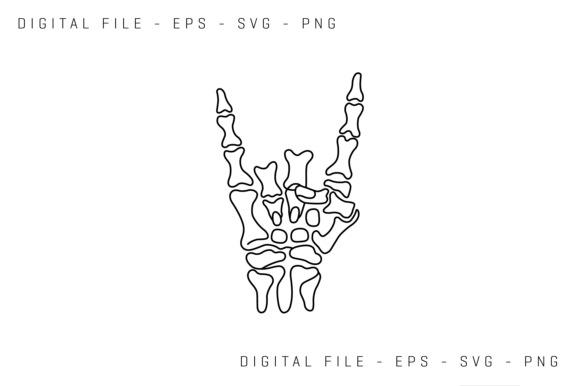
The mood of this design is unmistakable. It carries a rebellious yet playful energy that fits perfectly into the current wave of boutique streetwear and alternative home decor. The silhouette of the hand making the "rock on" sign is iconic, but in embroidery, icons can easily become muddy if the lines are too close together. Upon reviewing the digital embroidery file formats provided—specifically the editable EPS and SVG alongside the high-resolution PNG—I noticed the vector paths are clean. This is a promising sign for anyone looking to convert these design assets into a true machine embroidery design.
The visual personality here is sharp. Unlike softer, floral motifs that rely on blending thread colors, a skeleton hand demands high contrast. The separation between the bones and the negative space is crucial. If you are planning to use this as an applique design, the outlines are distinct enough to cut fabric cleanly. If you are aiming for a standard fill, the spacing suggests that a medium-density fill stitch would work best to maintain the definition of the phalanges without creating a puckered mess.
Real-World Application: The Custom Tote Bag Scenario
To truly test the viability of the Skeleton Hand Rock and Roll Gesture, I imagined a specific real-life scenario: a custom order for a local music festival vendor needing branded tote bag designs. The client wants something durable that stands out against a black canvas bag. In this context, the design shines. The stark white or metallic silver threads typically used for bones pop incredibly well against dark fabrics.
However, the execution matters. For a tote bag, which undergoes significant stress and friction, a simple running stitch outline might wear down too quickly. I would recommend reinforcing the key structural lines of the hand with a tight satin stitch border. This not only adds a professional finish but ensures the finished product survives being stuffed with vinyl records and festival merch. The gesture itself is compact enough to sit comfortably on the lower corner of a bag without interfering with the handles, making it a practical choice for functional handmade products.
Apparel and Wearability Considerations
Moving from bags to clothing, let's consider sweatshirt embroidery. This is a popular category for Etsy sellers and small shop owners. The skeleton hand works exceptionally well on the chest pocket of a hoodie or centered on the back of a denim jacket. The rigid nature of the bone structure holds up well on heavier fabrics like fleece or denim.
Caution is required, however, when applying this to stretchy materials like thin cotton t-shirts. The stitch density of a skeleton design can sometimes be too rigid for high-stretch areas, leading to fabric distortion after a few washes. If you are creating custom apparel for a broader audience, always test the design on a scrap piece of the exact fabric you intend to use. Pay close attention to the tips of the fingers and the thumb; these are high-movement areas where stitches can break if the stabilizer isn't robust enough.
Navigating Technical Challenges
Every designer knows that not all graphics translate perfectly to thread. With the Skeleton Hand Rock and Roll Gesture, there are specific zones that require careful attention. The gaps between the fingers are narrow. If your hoop size is limited or your machine struggles with tight turns, these areas could bridge together, turning distinct fingers into a solid block. This is where the value of having the editable EPS and SVG files comes in. A skilled digitizer can tweak these vectors before converting them to ensure optimal spacing for your specific machine.
Furthermore, consider the fabric texture. On a plush towel or a textured knit, fine details can get lost. This design is best suited for smooth, tightly woven fabrics where the thread colors can lay flat and crisp. If you are attempting baby embroidery, perhaps for a rocker-themed onesie, ensure the backing is soft and the stitch count isn't too high, as babies have sensitive skin. A dense skeleton hand might feel scratchy against delicate skin, so a lighter fill or an appliqué approach with a soft fabric backing would be superior here.
Commercial Viability and Brand Consistency
For craft business owners, consistency is key to building trust. Using a graphic like this across different products—from patches to pillow covers—creates a cohesive brand identity. The Skeleton Hand Rock and Roll Gesture has strong recognition value. It instantly communicates a vibe without needing text. This makes it an excellent asset for printable mockups and social media previews, helping potential buyers visualize the personalized gift or small shop product before they buy.
When selling commercial embroidery items featuring this design, presentation impacts perceived value. A cleanly stitched hand with no jump stitches visible on the back signals professionalism. Customers are willing to pay more for a holiday embroidery gift or a wedding present that looks meticulously crafted. The edgy theme also opens doors for niche markets, such as biker gangs, music bands, or Halloween enthusiasts, allowing you to target specific demographics effectively.
Final Designer Notes and Best Practices
Before launching this design into your production line, here are my practical recommendations. First, always check the licensing terms associated with the ZIP folder. While the files include EPS, SVG, and PNG suitable for vinyl and printing, confirm if the license extends to physical goods sold for profit. Second, run a test stitch-out on a similar weight fabric. Check the tension; skeleton designs often reveal tension issues in the long, straight shafts of the finger bones.
Experiment with thread choices. While white is traditional, try using variegated threads or glow-in-the-dark polyester for a unique twist on the embroidered patch concept. Also, consider the background. On dark garments, a underlay stitch is non-negotiable to prevent the fabric color from showing through the bone structure. Finally, remember that while the digital files are versatile, the transition to embroidery requires respect for the medium. Treat the Skeleton Hand Rock and Roll Gesture not just as an image, but as a structural element of your textile art.
In conclusion, this graphic offers a solid foundation for creative entrepreneurs looking to add some edge to their catalog. With the right preparation, fabric selection, and stitching technique, it transforms from a simple Illustration into a standout feature on any finished product. Whether you are decorating a cap, a tea towel, or a leather jacket, this design has the versatility to perform, provided you approach it with the precision it deserves.